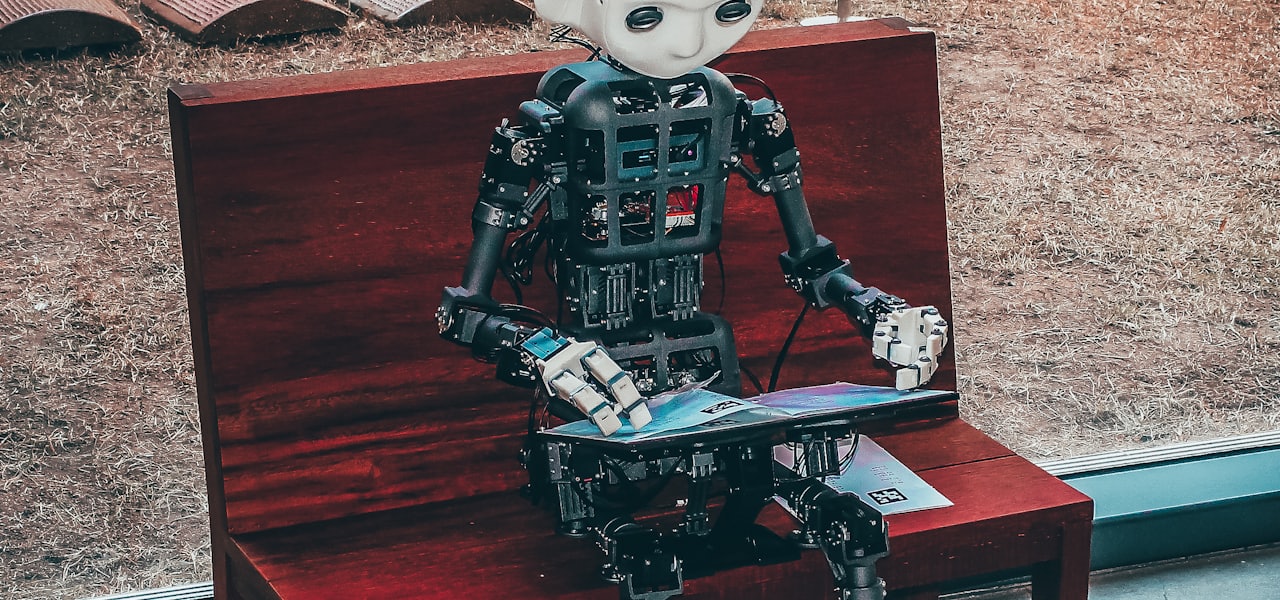
Comparing the best AI customer-support bot? An AI customer-support bot is software that uses machine learning to help you get more done — it lowers the barrier so anyone can produce professional output. Privacy matters too: check whether your data trains the model and whether a no-log or enterprise tier is available. Whether you are a beginner or a pro, the right AI customer-support bot slots into your workflow and pays for itself fast. We tested the leading options and ranked them by quality, value, and ease of use.
POP-11
POP-11 is a reflective, incrementally compiled programming language with many of the features of an interpreted language. It is the core language of the Poplog programming environment developed originally by the University of Sussex, and recently in the School of Computer Science at the University of Birmingham, which hosts the main Poplog website. POP-11 is an evolution of the language POP-2, developed in Edinburgh University, and features an open stack model (like Forth, among others). It is mainly procedural, but supports declarative language constructs, including a pattern matcher, and is mostly used for research and teaching in artificial intelligence, although it has features sufficient for many other classes of problems. It is often used to introduce symbolic programming techniques to programmers of more conventional languages like Pascal, who find POP syntax more familiar than that of Lisp. One of POP-11's features is that it supports first-class functions. POP-11 is the core language of the Poplog system. The availability of the compiler and compiler subroutines at run-time (a requirement for incremental compiling) gives it the ability to support a far wider range of extensions (including run-time extensions, such as adding new data-types) than would be possible using only a macro facility. This made it possible for (optional) incremental compilers to be added for Prolog, Common Lisp and Standard ML, which could be added as required to support either mixed language development or development in the second language without using any POP-11 constructs. This made it possible for Poplog to be used by teachers, researchers, and developers who were interested in only one of the languages. The most successful product developed in POP-11 was the Clementine data mining system, developed by ISL. After SPSS bought ISL, they renamed Clementine to SPSS Modeler and decided to port it to C++ and Java, and eventually succeeded with great effort, and perhaps some loss of the flexibility provided by the use of an AI language. POP-11 was for a time available only as part of an expensive commercial package (Poplog), but since about 1999 it has been freely available as part of the open-source software version of Poplog, including various added packages and teaching libraries. An online version of ELIZA using POP-11 is available at Birmingham. At the University of Sussex, David Young used POP-11 in combination with C and Fortran to develop a suite of teaching and interactive development tools for image processing and vision, and has made them available in the Popvision extension to Poplog. == Simple code examples == Here is an example of a simple POP-11 program: define Double(Source) -> Result; Source2 -> Result; enddefine; Double(123) => That prints out: 246 This one includes some list processing: define RemoveElementsMatching(Element, Source) -> Result; lvars Index; [[% for Index in Source do unless Index = Element or Index matches Element then Index; endunless; endfor; %]] -> Result; enddefine; RemoveElementsMatching("the", [[the cat sat on the mat]]) => ;;; outputs [[cat sat on mat]] RemoveElementsMatching("the", [[the cat] [sat on] the mat]) => ;;; outputs [[the cat] [sat on] mat] RemoveElementsMatching([[= cat]], [[the cat]] is a [[big cat]]) => ;;; outputs [[is a]] Examples using the POP-11 pattern matcher, which makes it relatively easy for students to learn to develop sophisticated list-processing programs without having to treat patterns as tree structures accessed by 'head' and 'tail' functions (CAR and CDR in Lisp), can be found in the online introductory tutorial. The matcher is at the heart of the SimAgent (sim_agent) toolkit. Some of the powerful features of the toolkit, such as linking pattern variables to inline code variables, would have been very difficult to implement without the incremental compiler facilities.
NHS COVID-19
NHS COVID-19 was a voluntary contact tracing app for monitoring the spread of the COVID-19 pandemic in England and Wales, in use from 24 September 2020 until 27 April 2023. It was available for Android and iOS smartphones, and could be used by anyone aged 16 or over. Two versions of the app were created. The first was commissioned by NHSX and developed by the Pivotal division of American software company VMware. A pilot deployment began in May 2020, but on 18 June development of the app was abandoned in favour of a second design using the Apple/Google Exposure Notification system. Scotland and Northern Ireland had separate contact tracing apps. A 2023 study estimated that in its first year of use, the app's contact tracing function prevented an estimated 1 million cases, and 9,600 deaths. == Description == The app allowed users to: See the alert level of their local authority area (in Wales) or information about restrictions (in England); to enable this, the user must enter the first half of their postcode "Check in" at places displaying an NHS QR code poster (no longer required by legislation after 26 January 2022, removed from the app the next month) Be notified when they have been in close contact with someone who has tested positive for the virus Be notified when local health protection teams determine that people with the virus had attended a business or other venue around the same time as the user Check their symptoms, and book a coronavirus test if necessary If asked to self-isolate, receive information and a daily "countdown". At first, "close contact" was defined as being within 2 metres for 15 minutes, or within 4 metres for a longer time. These time durations were reduced from 29 October 2020, to as little as three minutes when the other person is at their most infectious, i.e. soon after they begin showing symptoms. === Implementation === The Android app was coded in Kotlin, and the iOS app in Swift. The backend used Java and is deployed to Amazon Web Services using Terraform. The code of the app and back-end is open-source and available on GitHub. == Context == The app was part of the UK's test and trace programme which was chaired by Dido Harding; from 12 May 2020 Tom Riordan, chief executive of Leeds City Council, led the tracing effort. == First phase and cancellation == === Description === In March 2020, NHSX commissioned a contact tracing app to monitor the spread in the United Kingdom of the coronavirus disease 2019 (COVID-19) in the 2020 pandemic, developed by the Pivotal division of American software company VMware. The app used a centralised approach, in contrast to the Google / Apple contact tracing project. NHSX consulted ethicists and GCHQ's National Cyber Security Centre (NCSC) about the privacy aspects. The app recorded the make and model of the phone and asked the user for their postcode area. It generated a unique installation identification number and also a daily identification number. It then used Bluetooth Low Energy (BLE) to record the daily identification number of other users nearby. If a user was unwell, they could tell the app about symptoms which are characteristic of COVID-19, such as a fever and cough. These details were then passed to a central NHS server. This would assess the information and notify other users that have been in contact, giving them appropriate advice such as physical distancing. The NHS would also arrange for a swab test of the unwell user and the outcome would determine further notifications to contacts: if the test confirmed infection with COVID-19, the contacts would be asked to isolate. By June 2020, £11.8 million had been spent on the app; in 2020–21, £35 million was spent on the app. === Deployment === The first public trial of the app began on the Isle of Wight on 5 May 2020 and by 11 May it had been downloaded 55,000 times. When the first national contact tracing schemes were launched – Test, Trace, Protect in Wales on 13 May, then on 28 May NHS Test and Trace in England, and Test and Protect in Scotland – the app was not ready to be included. Replying to a question at the government's daily briefing on 8 June, Hancock was unable to give a date for rollout of the app in England, saying it would be brought in "when it's right to do so". On 17 June, Lord Bethell, junior minister for Innovation at the Department of Health and Social Care, said "we're seeking to get something going before the winter ... it isn't a priority for us at the moment". On 18 June, Health Secretary Matt Hancock announced development would switch to the Apple/Google system after admitting that Apple's restrictions on usage of Bluetooth prevented the app from working effectively. At the same press briefing Dido Harding, leader of the UK's test and trace programme, said "What we've done in really rigorously testing both our own Covid-19 app and the Google-Apple version is demonstrate that none of them are working sufficiently well enough to be actually reliable to determine whether any of us should self-isolate for two weeks [and] that's true across the world". === Concerns === The first, ultimately rejected, version of the app was subject to privacy concerns, the government backtracking on initial statements that the data collected from the app would not be shared outside the NHS. Matthew Gould, CEO of NHSX, the government department responsible for the app, said the data would be accessible to other organisations, but did not disclose which. Data collected would not necessarily be anonymised and would be held in a centralised repository. Over 150 of the UK's security and privacy experts warned the app's data could be used by 'a bad actor (state, private sector, or hacker)' to spy on citizens. Fears were discussed by the House of Commons' Human Rights Select Committee about plans for the app to record user location data. Parliament's Joint Committee on Human Rights said this version of the app should not be released without proper privacy protections. The second version of the app, released nationwide, addressed these concerns by employing a decentralised framework, the Apple/Google Exposure Notification system. Under this system, users remain pseudonymous: a person diagnosed with COVID-19 does not know which people are informed about an encounter, and contacted persons do not receive any information about the person diagnosed with COVID-19. The functionality of the app was also questioned in late April and early May 2020, as the software's use of Bluetooth required the app to be constantly running, meaning users could not use other apps or lock their device if the app was to function properly. The developers of the app were said to have found a way of working around this restriction. === Related contracts === Faculty – a company linked to Cambridge Analytica – provided research and modelling to NHSX in support of the response to the pandemic. Palantir, also linked to Cambridge Analytica, provided their data management platform. These contracts began in February and March respectively. == Second phase == As outlined on cancellation of the first app on 18 June 2020, the Department of Health and Social Care published on 30 July a brief description of the "next phase" app. Users would be able to scan a QR code at venues they visit, and later be notified if they had visited a place which was the source of a number of infections; the app would also assist with identifying symptoms and ordering a test. By using the Exposure Notification system from Apple and Google, personal data would be decentralised. Zuhlke Engineering Ltd, the UK branch of Swiss-based Zühlke Group, used 70 staff to complete the development of the app in 12 weeks. Zuhlke Engineering was awarded "Development Team of the Year" title at UK IT Industry awards in November 2021 for development of NHS COVID-19 application. === Timeline === Testing of the app by NHS volunteer responders, and selected residents of the Isle of Wight and the London Borough of Newham, began around 13 August. The app was made available to the public (aged 16 or over) in England and Wales on 24 September. An updated app released on 29 October, in part from collaboration with the Alan Turing Institute, improved the accuracy of measurements of the distance between the user's phone and other phones. At the same time, the duration threshold for determining exposure was reduced; this was expected to lead to an increase in the number of users told to self-isolate. An update to the app in April 2021, timed to coincide with easing of restrictions on hospitality businesses, was blocked by Apple and Google. It was intended that users who tested positive would be asked to share their history of visited venues, to assist in warning others, but this would have contravened assurances by Apple and Google that location data from devices would not be shared. === Statistics and effectiveness === The app was downloaded six million times on the first day it was generally availa
WS-SecurityPolicy
WS-Security Policy is a web services specification, created by IBM and 12 co-authors, that has become an OASIS standard as of version 1.2. It extends the fundamental security protocols specified by the WS-Security, WS-Trust and WS-Secure Conversation by offering mechanisms to represent the capabilities and requirements of web services as policies. Security policy assertions are based on the WS-Policy framework. Policy assertions can be used to require more generic security attributes like transport layer security
Viewport
A viewport is a polygon viewing region in computer graphics. In computer graphics theory, there are two region-like notions of relevance when rendering some objects to an image. In textbook terminology, the world coordinate window is the area of interest (meaning what the user wants to visualize) in some application-specific coordinates, e.g. miles, centimeters etc. The word window as used here should not be confused with the GUI window, i.e. the notion used in window managers. Rather it is an analogy with how a window limits what one can see outside a room. In contrast, the viewport is an area (typically rectangular) expressed in rendering-device-specific coordinates, e.g. pixels for screen coordinates, in which the objects of interest are going to be rendered. Clipping to the world-coordinates window is usually applied to the objects before they are passed through the window-to-viewport transformation. For a 2D object, the latter transformation is simply a combination of translation and scaling, the latter not necessarily uniform. An analogy of this transformation process based on traditional photography notions is to equate the world-clipping window with the camera settings and the variously sized prints that can be obtained from the resulting film image as possible viewports. Because the physical-device-based coordinates may not be portable from one device to another, a software abstraction layer known as normalized device coordinates is typically introduced for expressing viewports; it appears for example in the Graphical Kernel System (GKS) and later systems inspired from it. In 3D computer graphics, the viewport refers to the 2D rectangle used to project the 3D scene to the position of a virtual camera. A viewport is a region of the screen used to display a portion of the total image to be shown. In virtual desktops, the viewport is the visible portion of a 2D area which is larger than the visualization device. When viewing a document in a web browser, the viewport is the region of the browser window which contains the visible portion of the document. If the size of the viewport changes, for example as a result of the user resizing the browser window, then the browser may reflow the document (recalculate the locations and sizes of elements of the document). If the document is larger than the viewport, the user can control the portion of the document which is visible by scrolling in the viewport.
Contrast-to-noise ratio
Contrast-to-noise ratio (CNR) is a measure used to determine image quality. CNR is similar to the metric signal-to-noise ratio (SNR), but subtracts a term before taking the ratio. This is important when there is a significant bias in an image, such as from haze. As can be seen in the picture at right, the intensity is rather high even though the features of the image are washed out by the haze. Thus this image may have a high SNR metric, but will have a low CNR metric. One way to define contrast-to-noise ratio is: C = | S A − S B | σ o {\displaystyle C={\frac {|S_{A}-S_{B}|}{\sigma _{o}}}} where SA and SB are signal intensities for signal producing structures A and B in the region of interest and σo is the standard deviation of the pure image noise.
Event store
An event store is a type of database optimized for storage of events. Conceptually, an event store records only the events affecting an entity, dossier, or policy, and the state of the entity at any point in its history can be reconstructed by replaying its contributing events in sequential order. Events (and their corresponding data) are the only "real" facts that should be stored in the database. All other objects can be derived from these events, meaning they are instantiated in memory by runtime code as needed (e.g. for showing in a user interface). In theory, any object that aggregates over recorded event data is not stored in the database. Instead these objects are built 'on the fly', by traversing the event history. When the aggregated object instance is no longer needed, it can simply be discarded (released from memory). == Example with insurance policies == For example, the event store concept of a database can be applied to insurance policies or pension dossiers. In these policies or dossiers the instantiation of each object that make up the dossier or policy (the person, partner(s), employments, etc.) can be derived and can be instantiated in memory based on the real world events. == Double timeline == A crucial part of an event store database is that each event has a double timeline: This enables event stores to correct errors of events that have been entered into the event store database before. The two dates are: Valid date is the date at which the event has become valid. Transaction date is the date at which the event is entered into the database. == Error correction == Another crucial part of an event store database is that events that are stored are not allowed to be changed. Once stored, also erroneous events are not changed anymore. The only way to change (or better: correct) these events is to instantiate a new event with the new values and using the double timeline. A correcting event would have the new values of the original event, with an event data of that corrected event, but a different transaction date. This mechanism ensures reproducibility at each moment in the time, even in the time period before the correction has taken place. It also allows to reproduce situations based on erroneous events (if required). == Advantages and disadvantages == One advantage of the event store concept is that handling the effects of back dated events (events that take effect before previous events and that may even invalidate them) is much easier. An event store will simplify the code in that rolling back erroneous situations and rolling up the new, correct situations is not needed anymore. Disadvantage may be that the code needs to re-instantiate all objects in memory based on the events each time a service call is received for a specific dossier or policy. == Compared to regular databases == In regular databases, handling backdated events to correct previous, erroneous events can be painful as it often results in rolling back all previous, erroneous transactions and objects and rolling up the new, correct transactions and objects. In an event store, only the new event (and its corresponding facts) are stored. The code will then redetermine the transactions and objects based on the new facts in memory.